Ten Years After Harambe: The Gorilla We Still Grieve, the Questions We Still Carry
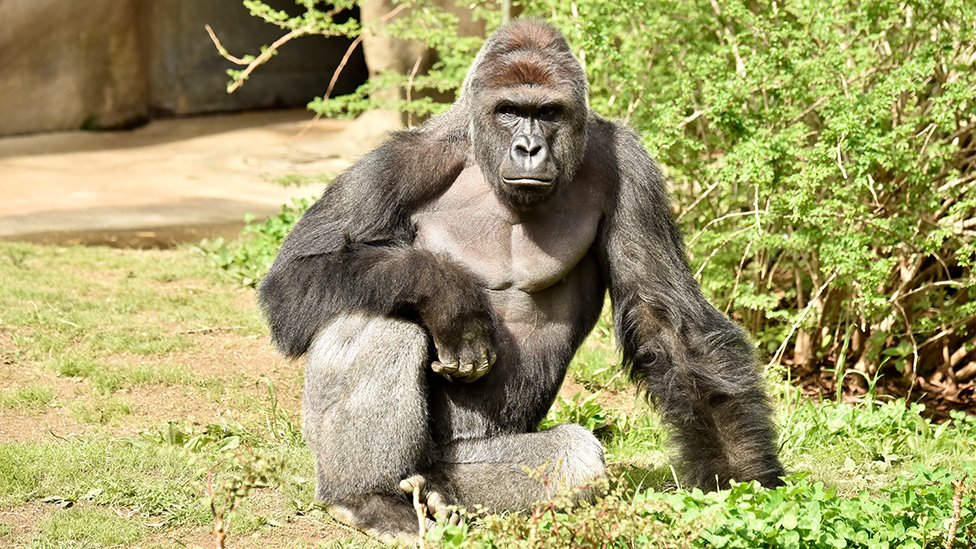
Ten Years After Harambe: The Gorilla We Still Grieve, the Questions We Still Carry
Ten years ago today, on May 28, 2016, a single gunshot echoed through the Cincinnati Zoo and changed something small but permanent inside millions of us. Harambe, a 17-year-old western lowland silverback gorilla, was killed to save a three-year-old boy who had fallen into his enclosure. The boy lived. Harambe did not. And the world, for reasons we’re still unpacking, could not let it go.

I remember the video. Not the graphic parts that circulated later, but the raw, shaky footage that hit our feeds that evening. A massive, powerful animal and a tiny child in the water together. Harambe dragging the boy—not always gently, but with what looked, to some eyes, like curiosity mixed with confusion. The crowd screaming. Then the sudden, decisive crack of the rifle. In ten minutes, a life that had spanned two zoos, thousands of visitors, and one quiet birthday the day before was over.
Harambe wasn’t just any gorilla. Born at the Gladys Porter Zoo in Texas in 1999, he carried the quiet dignity many captive gorillas seem to develop—an awareness that feels almost too heavy for the space they’re given. By the time he arrived in Cincinnati in 2014, he had grown into a 450-pound silverback with the kind of presence that made people pause. Zoo staff spoke of his personality: strong, inquisitive, sometimes playful. He was part of a carefully managed breeding program for a species under threat in the wild.

That Saturday afternoon, a mother was at the zoo with her children. Like so many parents, she was managing multiple little ones in a crowded, stimulating place. One moment of divided attention—the kind every exhausted parent knows too well—and her three-year-old climbed a three-foot barrier, pushed through bushes, and dropped fifteen feet into the moat. The fall alone could have been fatal. Instead, he landed in shallow water with a 440-pound gorilla.
What followed was ten agonizing minutes of uncertainty. Harambe approached the child. He stood over him, touched him, carried him through the water, stood him up, sat him down. Primatologists later debated his intentions the way the rest of us debated them on Twitter: protective instinct? Agitation from the screaming crowd? A mix of both? The two female gorillas in the exhibit retreated when called. Harambe stayed, curious or concerned or simply unwilling to leave this strange new visitor. Zoo officials faced an impossible calculation. The Dangerous Animal Response Team made the call. One shot. Harambe was gone. The boy was rescued with only minor injuries.
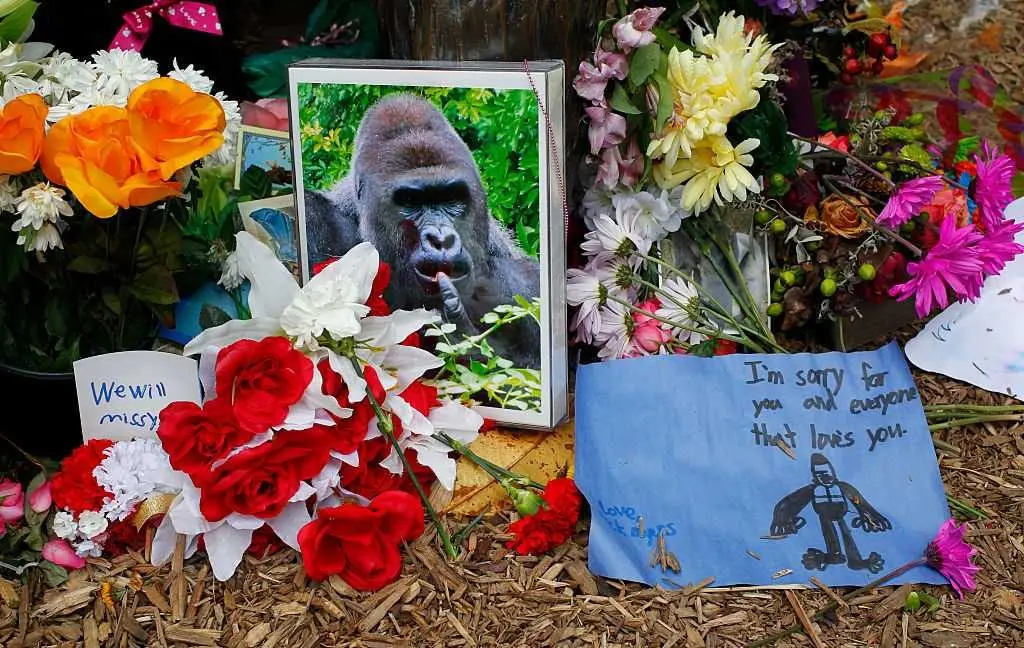
The grief that followed felt strangely personal. People cried for a gorilla they had never met. They posted photos of Harambe with captions that ached: “He was just being a gorilla.” Others raged at the mother, blaming her in ways that felt both understandable and cruel. A Change.org petition for “Justice for Harambe” gathered hundreds of thousands of signatures. The family released statements praising the zoo and asking for privacy. They were thankful their child was alive. Many of us understood that relief on a bone-deep level. Yet the sorrow for Harambe lingered.
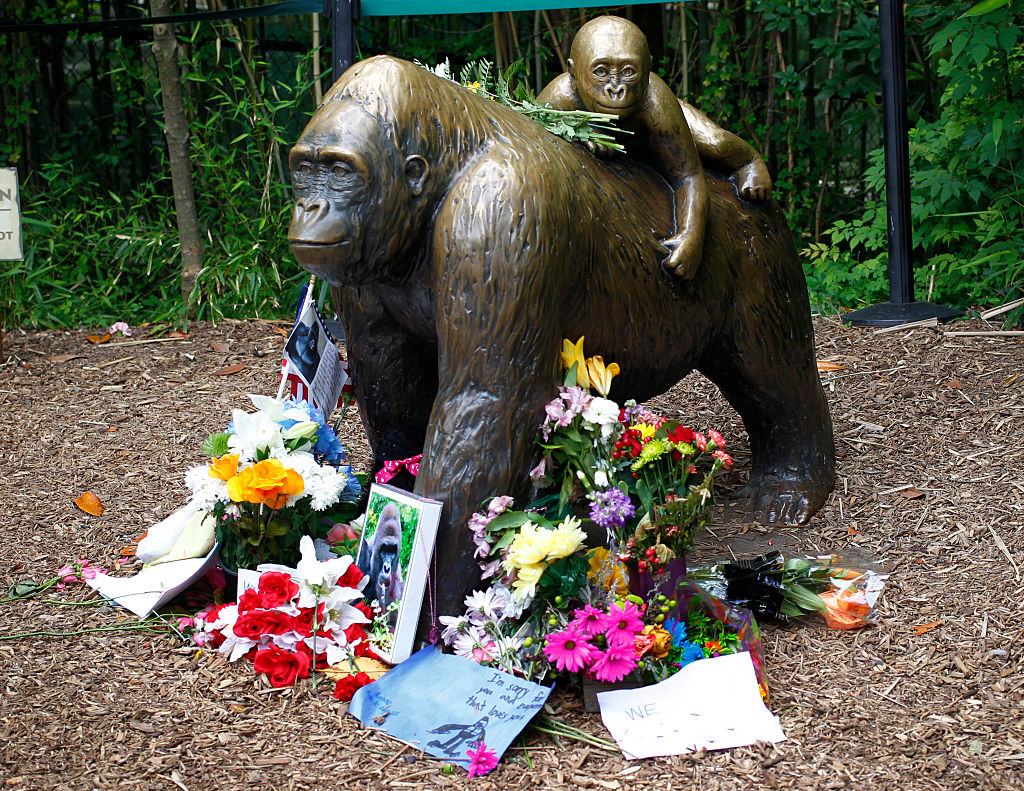
Why did this one death cut so deeply? We see animal suffering daily—factory farms, habitat destruction, wildlife trafficking—and often scroll past. But Harambe’s story had everything: an innocent child, a majestic animal, split-second decisions, and the raw vulnerability of parenthood. It forced us to confront uncomfortable truths. We love wild animals enough to pay to see them, but we keep them in spaces that can never fully replicate their natural lives.
Social media turned the tragedy into something else entirely. Within days, Harambe became a meme. But underneath the absurdity was something tender: a collective refusal to let the gorilla’s death become just another forgotten news story. We couldn’t save him, but we could keep saying his name.
The Cincinnati Zoo responded with real changes. Gorilla World stayed closed for over a year. When it reopened, barriers were higher, netting was added, and safety protocols were strengthened. Zoo officials mourned publicly and honestly. They had lost an animal they cared for deeply. Staff reportedly wept.
Those questions matter, but they can also miss the deeper ache. Harambe’s death reminded us how thin the line is between wonder and tragedy when humans and wild animals share space. It exposed our complicated relationship with nature—we want to protect it, learn from it, get close to it, but we’re terrified when it gets close to us. It highlighted the impossible weight of split-second choices: the zookeepers who had to live with pulling that trigger, the mother whose momentary lapse became global news, the child who will grow up with a story he may not fully remember.
A decade on, Harambe’s name still appears in comment sections, protest signs, and late-night jokes. His face still pops up in tributes and memes alike. Some see him as a symbol of animal rights. Others as proof that human life must come first. Many of us just feel a quiet sadness when we think of him—a gentle giant who never asked to be in that enclosure, never asked to make that choice for anyone.
In the end, Harambe’s story isn’t really about blame. It’s about loss. The loss of a life that mattered. The loss of innocence for a little boy who just wanted to see a gorilla up close. The loss of certainty for parents everywhere who know, in their hearts, that “it could have been my kid.” And maybe, most painfully, the loss of a simpler time when we could look at a magnificent animal behind glass and feel only delight instead of this complicated, lingering guilt.
We keep saying his name because some part of us still mourns. Not just the gorilla, but what his death revealed about us: how fiercely we love, how quickly we judge, how desperately we want the world to be safer for both our children and the beautiful creatures we share it with. Harambe deserved better. The little boy deserved safety. And all of us—parents, animal lovers, internet citizens—deserve the grace to hold both truths at once.
Ten years later, the enclosure is quieter, the barriers stronger, and the conversation still echoes. Harambe’s legacy isn’t just memes or outrage. It’s the uncomfortable empathy he left behind—the reminder that every life, human or gorilla, is fragile, precious, and connected in ways we’re still learning to honor.


Comments
Post a Comment